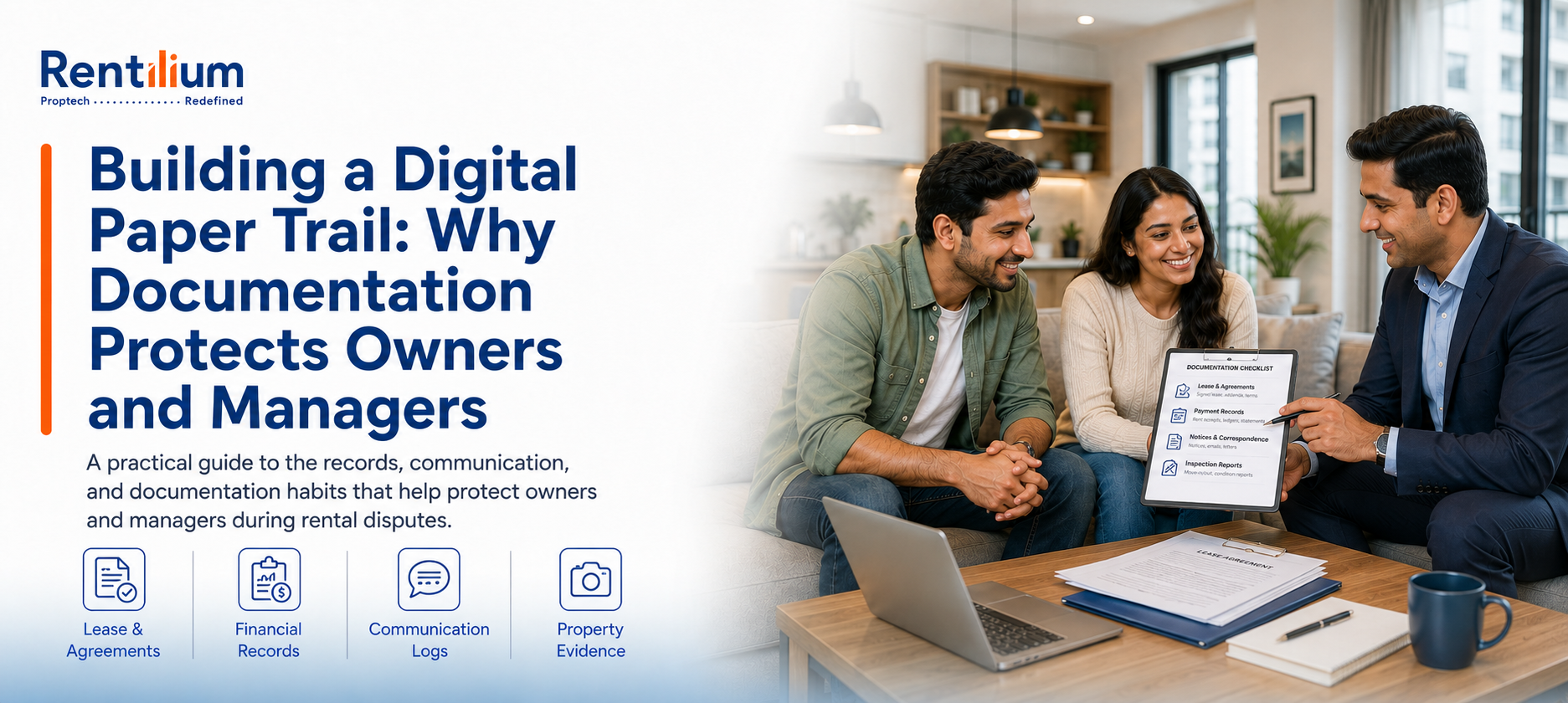
Building a Digital Paper Trail: Why Documentation Protects Owners and Managers
Written by: Saloni Bhatia
Picture this: a tenant claims that they paid rent on time. However, you know they didn’t. But without any proof, it’s just your word against theirs.
Scattered paperwork and verbal promises won’t really hold up when a disagreement turns into a court case. That’s where documentation becomes your legal protection.
This blog explains what to record, how to keep digital records organized, and why a strong paper trail is one of the best defenses available to owners and managers.
Why “He Said, She Said” Fails in Rent Disputes?
When a dispute reaches a judge, memory does not win - strong evidence does. Dated photos, signed documents, written messages, receipts, and other proof carry far more weight than a verbal promise once someone denies that it happened.
Documentation turns a shaky argument into a record that can actually be examined and supported.
What Counts as a “Digital Paper Trail”?
A digital paper trail is not just one file. It is a group of records that work together and cover the full history of the tenancy.
A - Lease & Agreement Documents
Keep signed copies of leases, renewals, addenda, parking or pet rules, and move-in or move-out inspection reports with timestamped photos or videos.
B - Financial Records
Maintain a running rent ledger, receipts, security deposit records, repair invoices, and maintenance invoices.
C - Communication Logs
Save emails, texts, maintenance tickets, response times, lease violation notices, entry notices, and late-rent notices.
D - Property Condition Evidence
Keep dated photos and videos, contractor or vendor reports, and formal inspection checklists.
Why Digital (Not Just “Keeping Files”) Matters?
Digital records are searchable, easier to organize, and much easier to retrieve months or years later than paper folders.
Timestamped files also carry built-in date history, and centralized records prevent critical information from disappearing when a manager or staff member leaves.
Common Documentation Mistakes That Weaken Legal Standing
1. Relying Only on Verbal Agreements
A spoken understanding about rent, repairs, or timelines can become impossible to prove later.
2. Deleting Old Texts and Emails
Deleting communication after move-out may erase evidence that becomes important if a dispute resurfaces.
3. Skipping Move-In or Move-Out Photos
Without dated images, proving the actual condition of a unit becomes much harder.
4. Maintaining Inconsistent Rent Ledgers
Gaps or mismatches between ledgers and bank deposits weaken the reliability of the owner’s records.
How Documentation Protects Managers, Not Just Owners
Documentation protects the people managing the property every day as much as it protects the owner. Clear records can show that a property manager followed instructions, responded to complaints, and acted properly.
Repair invoices, insurance claims, inspection reports, maintenance tickets, and written decisions all form part of the evidence trail.
Quick Reference Checklist
- Signed lease + addenda stored digitally
- Move-in / move-out photos with dates
- Rent payment ledger updated regularly
- All notices sent in writing with delivery confirmation
- Maintenance requests and responses logged
- Cloud backup of all records
- Defined record retention timeline
Conclusion
Documentation is not paperwork for its own sake - it is risk management. Every receipt, lease, inspection report, and message saved today can become protection tomorrow.
You do not need a perfect system overnight. Start small, identify the biggest gaps, and build a consistent documentation habit.
Frequently Asked Questions (FAQs)
1. What’s the most important document to keep for rent disputes?
The signed lease and a consistent rent payment ledger matter the most because they show what was agreed and whether the agreement was followed.
2. How long should owners keep tenant records after moving out?
The article recommends checking local retention laws and notes that a common safe range is around 3 to 7 years.
3. Are text messages and emails considered valid evidence in the courtroom?
The article states that copies of leases, demand letters, emails, and texts related to a dispute are commonly used as documentary evidence.