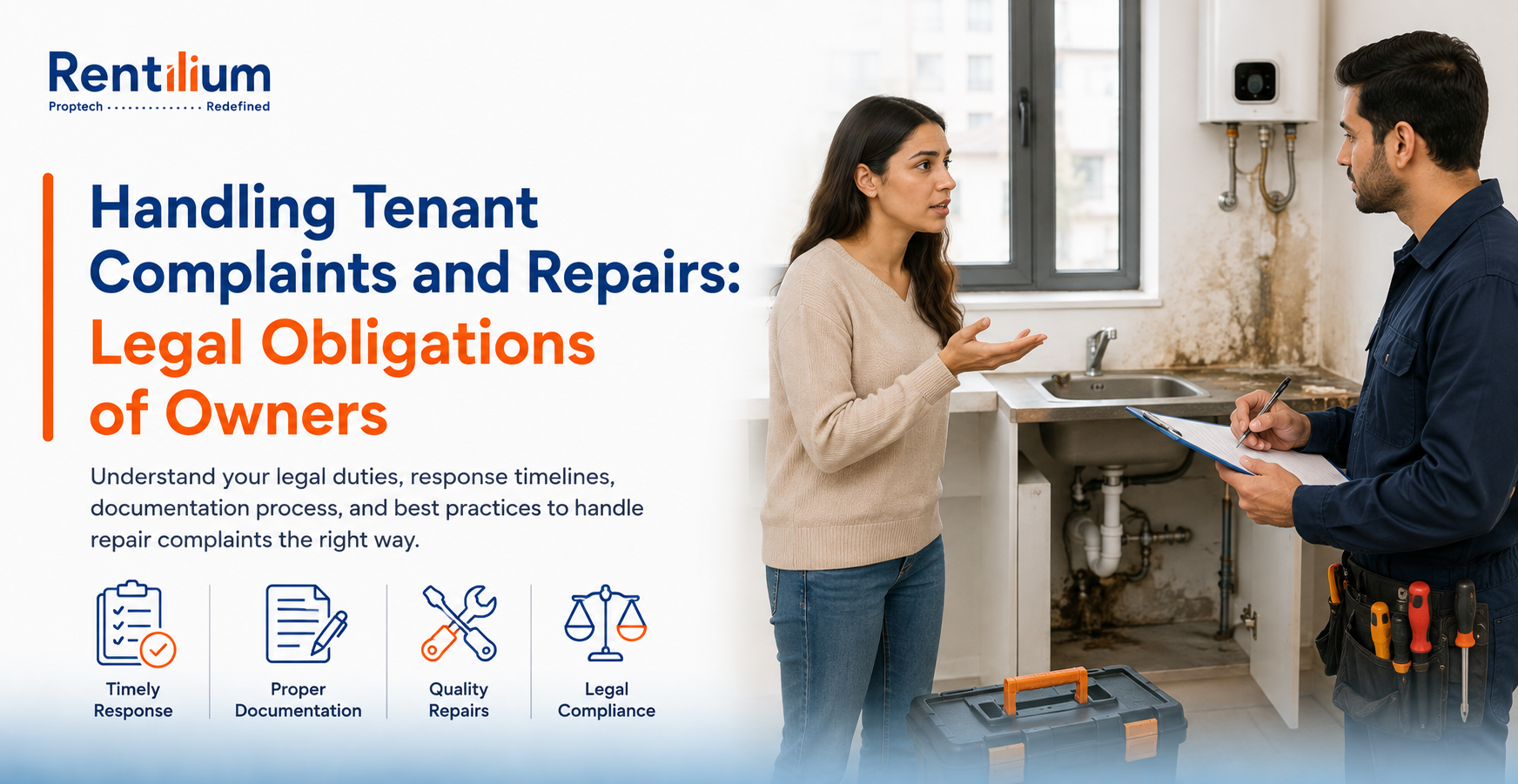
Handling Tenant Complaints and Repairs: Legal Obligations of Owners
Written by: Saloni Bhatia
Rent is paid on time. The lease is signed. But one broken heater in January can undo it all.
Property owners often treat maintenance requests as routine paperwork until an ignored complaint turns into rent withholding, a lawsuit, or a call from code enforcement.
This is not only about being a good landlord. Owners usually have a duty to maintain habitability, and tenants generally have a right to a safe, livable home.
What Counts as a “Repair Complaint” Vs. a Preference
Not every tenant complaint is a legal emergency. A habitability issue affects health or safety, while a preference is usually about style or comfort.
Habitability Issues
No heat in winter, a broken lock, a water leak, gas leaks, flooding, and other safety-related problems.
Tenant Preferences
Outdated cabinets, repainting a wall, newer appliances, and other comfort or style requests.
Legal Response Timelines Owners Must Follow
The clock starts when the complaint arrives. The article notes that emergency conditions may require action within approximately 24 to 72 hours, while serious non-emergency repairs can have longer response windows.
Response speed should match urgency. Emergencies demand immediate or same-day action; urgent but non-emergency repairs should be handled within days rather than weeks.
The Owner’s Intake & Documentation Process
1. Provide a Written Complaint Channel
Use a dedicated email, maintenance line, or tenant portal rather than relying on scattered verbal requests.
2. Log the Date and Time
Record when every complaint arrives because that timestamp can start the legal response clock.
3. Acknowledge Receipt in Writing
Confirm that the owner has received and is aware of the issue.
4. Document Repair Actions
Record vendor visits, work performed, delays, reasons for delays, and completion dates.
5. Save Before-and-After Evidence
Keep photos or videos showing both the original condition and the completed repair.
What Happens When Complaints Go Unresolved?
1. Rent Withholding
Where legally permitted, tenants may withhold rent until serious habitability problems are resolved.
2. Repair & Deduct
In some jurisdictions, tenants may pay for qualifying repairs and deduct the cost from rent.
3. Constructive Eviction
Severe unlivable conditions may support an argument that the tenant was forced to move out early.
Common Mistakes Owners Make
1. Ignoring or Delaying Written Complaints
A written complaint creates a record of when the owner became aware of the problem.
2. Relying on Verbal Communication
Calls and hallway conversations leave little reliable evidence if the dispute escalates.
3. Assuming Lease Clauses Override the Law
A lease cannot automatically remove statutory habitability duties.
4. Skipping Licensed, Insured Contractors
Unlicensed or uninsured contractors can create additional liability and insurance problems.
Building a Complaint Repair & Complaint System
1. Centralized Complaint Intake
Route requests through one portal, email address, or phone number so nothing gets lost.
2. Defined Internal SLAs
Set internal response targets that meet or beat applicable legal minimums.
3. Emergency-Ready Vendor Network
Maintain a list of reliable licensed and insured contractors for urgent issues.
When to Involve Legal Counsel or a Property Manager?
- Repeated complaints about the same issue
- A tenant threatens legal action or rent withholding
- The problem involves serious habitability or safety concerns
- Access, liability, or documentation becomes disputed
Conclusion
A rental property is not only an investment; it is someone’s home. Owners who respond promptly, document complaints properly, use reliable contractors, and maintain a centralized repair process reduce the risk of routine maintenance turning into legal disputes.
Frequently Asked Questions (FAQs)
1. Can an owner enter a rental unit to inspect or repair it without the tenant’s permission?
The article states that owners generally need advance written notice, except in genuine emergencies such as fire or flooding.
2. Is an owner still responsible for repairs if the tenant caused the damage?
The article distinguishes ordinary habitability obligations from damage caused by a tenant’s negligence.
3. What happens if a tenant refuses to allow access for a scheduled repair?
Owners should document the refusal in writing and offer alternative access times. Repeated refusal may affect responsibility for resulting delays.