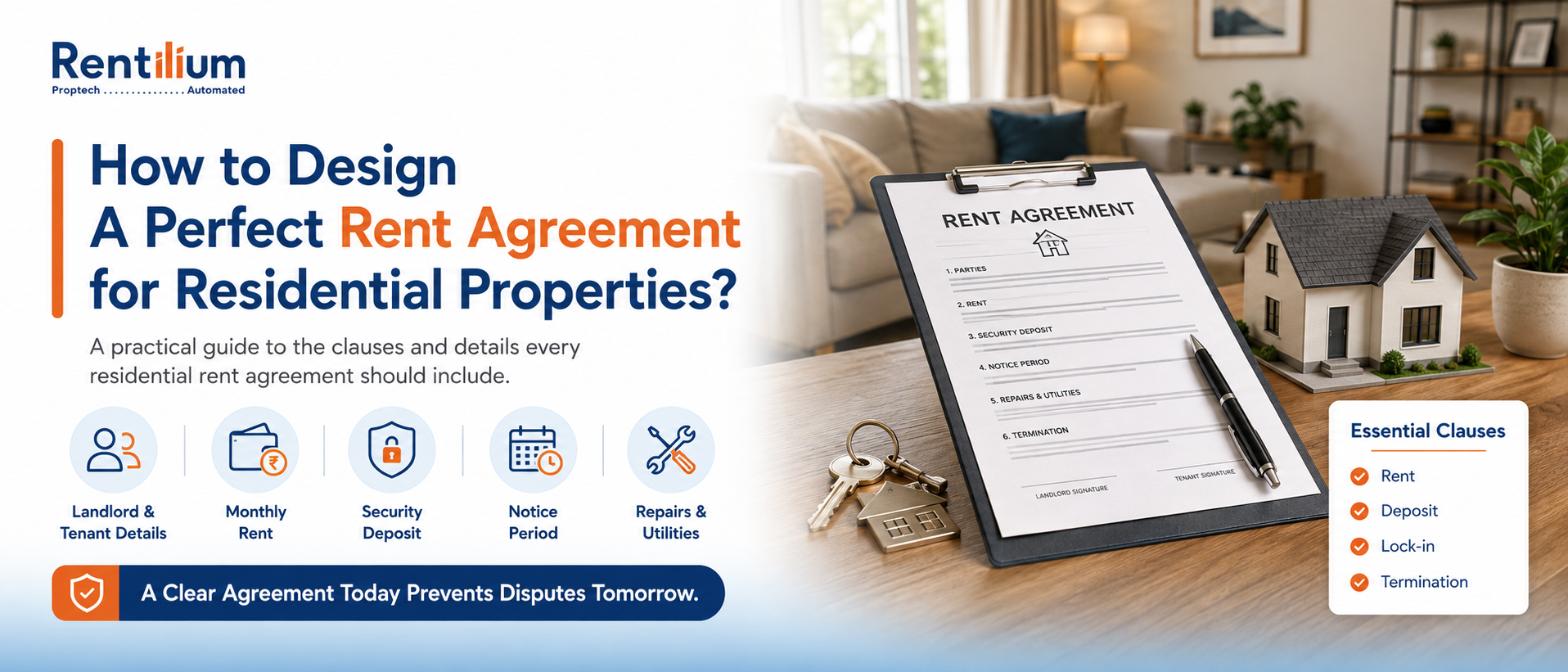
How to Design A Perfect Rent Agreement for Residential Properties?
Written by: Saloni Jain
Are you a property owner looking to design a proper rental agreement for your house, or a tenant preparing to sign one?
A strong rental agreement puts important expectations in writing before the keys are handed over. It records what the landlord and tenant have agreed to and helps reduce confusion later.
This guide explains what a rent agreement is, why it matters, and the specific details that should be clearly mentioned in a residential rental agreement.
What Is a Rent Agreement?
A rent agreement is a legal document signed by the owner and tenant before possession of the property is handed over.
It records the rights, responsibilities, and major financial and occupancy terms agreed between both parties.
- Names of landlord and tenant
- Property details and complete address
- Monthly rent amount
- Security deposit amount
- Duration of tenancy or lock-in period
- Rights and responsibilities of both parties
Why It’s Important to Design A Rent Agreement
Rental disputes often begin when expectations are not written down clearly.
- Protects both landlord and tenant from future disputes
- Creates a legal record of agreed terms
- Clarifies responsibilities and expectations
- Acts as proof of tenancy
- Can support address verification and other official purposes
14 Key Essentials Every Residential Rent Agreement Should Include
1. Verified Details of the Landlord and Tenants
The agreement should clearly identify both parties.
- Full names of landlord and tenant
- Permanent addresses
- Contact details
- Identity proof details
2. Complete Description of the Property
- Full property address
- Flat or house number
- Area details
- Parking space, if included
- Furniture and appliances provided
3. Monthly Rent Amount & Payment Terms
- Fixed monthly rent amount
- Rent due date
- Accepted payment methods
- Penalty for delayed payment, if applicable
4. Security Deposit
Security deposit terms should be especially clear because they are a common source of disputes.
- Deposit amount
- Permitted reasons for deductions
- Refund timeline
- Conditions under which deductions can be made
5. Duration of Tenancy
- Tenancy start date
- Tenancy end date
- Renewal terms
The article notes that many residential agreements in India are signed for 11 months.
6. Lock-in Period
If the agreement has a lock-in clause, it should clearly state:
- Duration of the lock-in period
- Consequences of early termination
- Any compensation payable
7. Notice Period
The agreement should specify how much notice either party must give before ending the tenancy. The article notes that common notice periods range from one to three months.
8. Maintenance & Repair Responsibilities
- Who pays for routine maintenance
- Who handles major repairs
- Who handles plumbing issues
- Who handles electrical repairs
- Responsibility for structural damage
9. Utility Bills
Utility responsibilities should never be assumed.
- Electricity
- Water
- Gas connection
- Internet
- Society maintenance charges
10. Rules on Guests, Pets, and Property Use
Any specific landlord or housing society restrictions should be written into the agreement.
- Pet policies
- Overnight guest rules
- Commercial activities
- Subletting
11. Landlord's Access to the Property
The agreement should explain when and how the landlord may enter the premises. Prior notice should generally be given except in emergencies, according to the article.
12. Rent Increment & Renewal Terms
- Whether rent increases annually
- Percentage of rent increment
- Renewal process
13. Termination Clause
The agreement should clearly state the situations in which either party may terminate the tenancy and the process that must be followed.
14. Signatures and Witnesses
Before move-in, the agreement should be fully signed.
- Landlord signature
- Tenant signature
- At least two witnesses, as recommended in the article
- Signed copies retained by both parties
What Exactly Happens When You Skip Signing A Rental Agreement?
Relying only on trust or verbal promises creates uncertainty once money, deposits, repairs, or move-out conditions become disputed.
- Proving the originally agreed rent becomes harder
- Security deposit refund terms become unclear
- There may be no agreed notice period
- Repair and damage responsibilities can become arguments
- There may be less documentary proof of the tenancy
- Landlords may also have difficulty enforcing unpaid rent or other agreed obligations
Common Mistakes to Avoid
- Paying the security deposit before reading the agreement fully
- Signing an agreement with blank spaces or missing information
- Relying on verbal promises instead of written terms
- Ignoring security deposit refund conditions
- Overlooking lock-in rules and exit penalties
- Forgetting to take move-in photos or videos
- Not saving records of payments made to the landlord
- Leaving without a fully signed or stamped copy of the agreement
Final Thoughts
A rent agreement is not just paperwork. It is an important written record that helps show what both parties agreed to before the tenancy began.
Before handing over keys or a security deposit, make sure both parties understand the same terms and that every important promise is documented.
A few minutes spent reviewing and clarifying the agreement can save both landlords and tenants from larger disputes later.