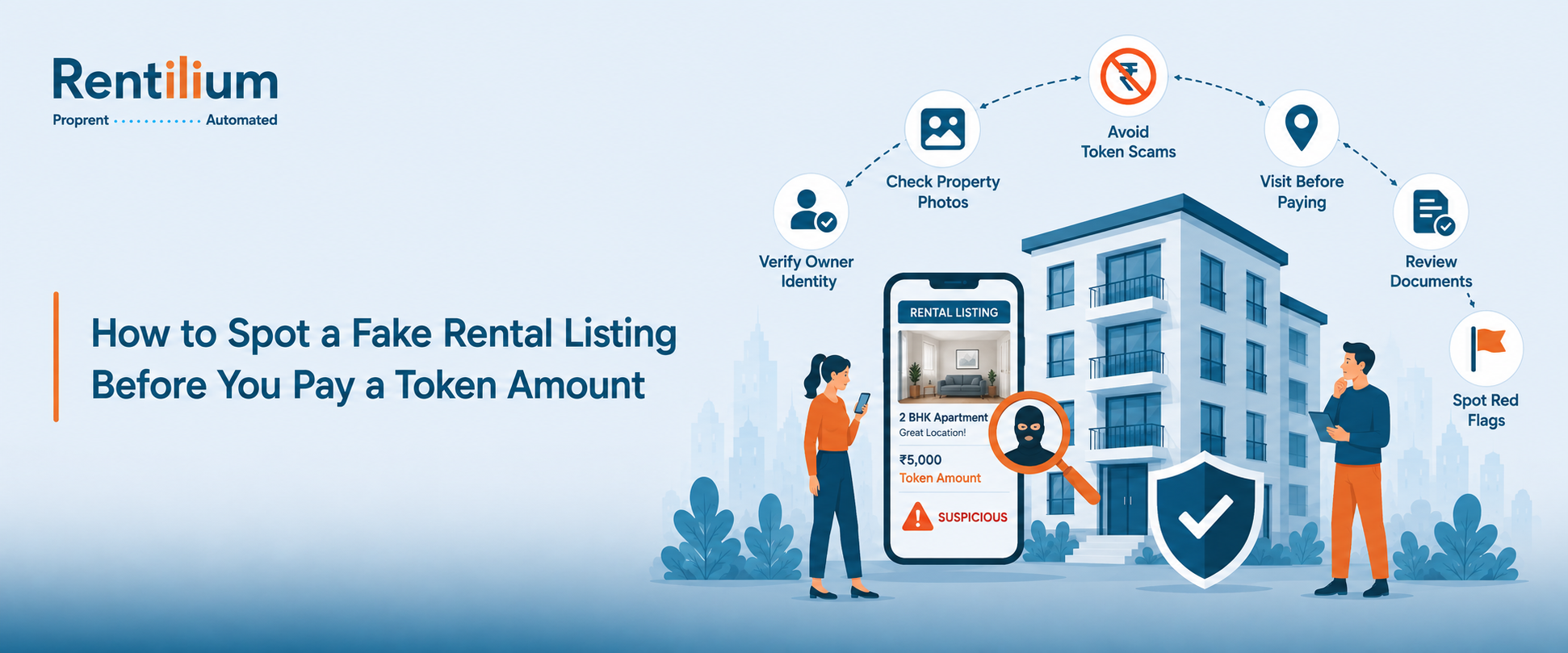
How to Spot a Fake Rental Listing Before You Pay a Token Amount
Written By- Saloni Bhatia
You’re scrolling listings late at night, and there it is - a spacious 2BHK in a prime location, priced way below the market rate.
Even the “owner” replies instantly, says they’re out of town, and asks for a ₹3,000 token amount so that the flat gets “blocked” for you before someone else grabs it. You pay.
The number goes silent. This exact story plays out across Indian cities every single week, and nowadays it’s only getting more common.
This guide breaks down the red flags of a fake rental listing and even shows you how exactly you can verify a property before paying any token amount.
Why Rental Scams are Rising in India?
In earlier times, renting a flat used to mean walking into a local broker’s office, verifying a few things, and signing a proper agreement. However, in today’s time, it means scrolling through Facebook Marketplace, WhatsApp groups, and even on the unverified OLX classifieds at midnight - that shift is exactly what the scammers were eyeing.
Cities like Pune, Bengaluru, Hyderabad, Gurugram, and Mumbai face a consistent crunch of high demand and low supply, and fraudsters use that pressure to rush renters into quick decisions before they can make a decision or even think clearly.
Hyderabad Police have issued public warnings about a sharp increase in rental fraud targeting tenants as well as the property owners, and cybercrime units across other metros also report a similar trend.
The worst hit are mostly the students, job seekers, and migrant workers who’re relocating from another city or state - those people who can’t visit the property in person and have no choice but to trust what they see on a screen.
Section A - Pressure Tactics - The Psychological Red Flags
Scammers don’t have to be good at acting - they just need you to stop thinking. Every fake rental listing follows the same playbook - create panic, test your patience, and push you to pay before your brain catches up.
Here are certain pressure tactics that you must watch for.
1. Urgency & scarcity language
This is one of the oldest tricks in the book, and hence it is still working out. You will hear some lines like “3 other people are interested” or “decision needed in 1 hour” - that are designed purely to make you feel like you’re about to lose a flat. However, a genuine landlord isn’t running a countdown timer on their own property.
2. Discouraging in-person visits
The “owner” always has a convenient excuse - meaning they can say they’re out of town, abroad, or “too busy” to meet, and also offers to have a virtual meeting instead. This isn’t a caution on their part, but it’s basically a way to stop you from ever seeing the actual address or confirming if the flat exists.
3. Refusing to negotiate or answer basic queries
Just ask about maintenance charges, society rules, water supply, and instantly you will witness the scammer dodge, deflect, or start giving vague answers. However, a real landlord is someone who knows their own property inside out and won’t flinch at such simple questions.
4. Guilt-tripping or emotional appeals
Well, some scammers switch their tactics and lean on sympathy - starting a sudden “sob story” about needing money urgently for a family emergency or medical bill. They make you feel as if you’re a bad person who refuses to pay at the time of need, and urge quick decision-making.
Quick Tip - Genuine landlords rarely rush you.
Creating urgency is absolutely the #1 psychological lever scammers use. It is because if you feel rushed, that’s your cue to slow down and verify.
Section B - Unverifiable Owner's Identity Red Flags
Just a quick question. Would you hand over money to someone whose name you also can’t even confirm? Well, this is something that happens in most rental scams - renters usually don’t verify who they’re paying.
Here are some ways in which you can spot an unverifiable owner before it costs you:
1. No verifiable ID or inconsistent details
Well, if you spot differences in the name on the listing and the UPI ID or bank account you’re asked to pay, that’s a massive warning sign. Genuine owners usually have no reason to route payments through someone else’s account.
2. Communication only via WhatsApp or call, never in person or video call
Scammers prefer only-text conversations as those are quite easy to control and quite hard to verify. If you sense that the “owner” is consistently avoiding every request for a live video call or an in-person meeting, they’re probably hiding the fact that they don’t own it - or even have access to - the property.
3. Vague or shifting property address
A real listing obviously has a real address. If you witness consistent change in the building name or the flat number, or if this is revealed only “after payment”, the scammer is buying time before you can check if the place exists.
4. No proof of ownership
You should ask for a property tax receipt, electricity bill, or a sale deed in the owner’s name, and a genuine landlord will produce it without any hesitation. If the “owner” is a scammer, they would make excuses or simply refuse.
Section C - Payment Before Viewing - The Biggest Red Flag
Almost every rental scam in India ends the same way - a renter pays first and finds out too late that “viewing” was never really an offer.
Here’s what to watch for:
Being asked for a token before any real viewing
This is probably the biggest scam in the purest form. No physical visit, no verified live video walkthrough of the property - just a request to pay first “to hold the unit.” If the owner is genuine, they have nothing to lose by just letting you see the place before you commit.
Payment requested to a personal UPI or individual account
Real rentals usually route payment via a registered entity, a broker’s firm, or at least a bank account that matches the owners’ verified name. A random UPI ID with no connection to the property is the biggest warning sign.
No receipt, agreement, or written confirmation
You should always ask for proof of payment or just a basic acknowledgement, and a scammer would dodge it entirely. A genuine token payment always comes with some form of written confirmation; a simple receipt would work too.
How To Verify a Listing Before Paying Anything (Actionable Steps)
Spotting the red flags is just half the job - however, knowing how to actively verify a listing is what actually protects your money. Just take it as your pre-payment checklist - run through it thoroughly, no matter how genuine the “owner” seems:
1. Request a live video walkthrough
Ask them to show the building’s nameplate, door number, or street view - live. A pre-recorded clip won’t work. Scammers are capable of faking a lot of things, but a real-time, unscripted video is much harder to produce.
2. Verify ownership documents
Always ask for the property tax receipt, electricity bill, or sale deed with the owner’s name clearly visible. If the “owner” is genuine, they will share these without any hesitation, as it’s a standard practice before renting out a home.
3. Cross-check the address independently.
Don’t blindly rely upon their word. You should independently search the building name and also the locality on Google Maps and Justdial at your level. If the address doesn’t exist or doesn’t match what they’ve described - that’s your answer.
4. Contact the society or RWA.
If possible, reach out to the society, RWA, or even to the neighbouring flats just to confirm if the unit is genuinely available for rent or not. It is because residents usually have an idea about who owns what.
5. Use verified, trusted rental platforms
Trustworthy platforms such as RentalGini usually confirm the listings and even verify the owners’ identity before publishing. This in turn removes a lot of guesswork involved in scrolling through unverified classifieds.
6. Never pay via untraceable methods.
Stick to a bank account where the account name matches the owner’s ID, and always keep a receipt safe with you. Moreover, cash-only deals must always be avoided; also, gift cards or transfers must be avoided.
What to Do If You Suspect a Scam?
Just realized something fishy in between the conversation? Don’t panic - but also don’t stay silent either. What you do in the next few minutes might make a huge difference between losing a small token amount and almost losing your entire deposit.
Here’s an action plan:
1. Stop all payments with immediate effect
As soon as you spot something off, it’s a warning sign to just pause spending any further amount - even if the “owner” insists. Scammers usually ask for a second or third round of payments right after the first one, betting that you’ll feel too invested to stop.
2. Report the listing on the platform.
As soon as you sense a false listing, you must flag it on the platform so that it can be taken down and nobody else can be fooled. On platforms such as RentalGini, listings and owner identities are usually verified upfront, and reporting a suspicious one helps to keep the platform safe for other renters as well.
3. File a complaint with the cybercrime cell.
If you’ve already made the payment to the scammer (fake owner), you should now file a complaint at cybercrime.gov.in as soon as you can. You must act quickly - the sooner you report a UPI or bank account fraud, the better the chances of recovering your funds.
How RentalGini Helps Renters Avoid Scams
After reading all those red flags, you must be wondering if there’s an easy way to rent without playing detective every time? That’s exactly why RentalGini exists. Every listing goes through an owner ID and ownership verification process before it is published. This way, fake profiles get filtered out easily.
Moreover, RentalGini also provides the facility of in-platform messaging so that you don’t need to share your personal number, and replace risky UPI transfers to strangers.
Conclusion
By the end of the day, renting a home must never make you feel like a race against the clock. Legitimate landlords usually don’t rush you, and hence they never ask you to pay blindly. If you remember nothing else from this guide - just remember three big red flags - constant pressure tactics, an owner you can’t verify, and being asked to pay before you’ve even seen the property. Spot any of these? If so, it's time to take a pause and dig deeper.
The good news? You don’t have to navigate all of this alone - just browse verified listings on RentalGini, where owner checks happen before you ever reach the payment stage.